



To those of us trying to remain alive, hopeful and human in a world that insists on death, destruction and dehumanization,
I have a confession to make. I am tired of this world. I am tired of this running that we do and call life while many others are running for their lives but are denied it. It is a tiredness that comes from beginning the morning with a cup of tea in one hand and, in my other, news of bombardments, mass killing and genocides in Palestine, Sudan, Congo, Yemen, Lebanon and Iran on my phone in the other. It is a tiredness of writing words like genocide that are at once normalized and contested. It is the tiredness of walking the streets that feel buzzing and alive while knowing that elsewhere the ground is made unlivable. Of knowing that all that remains in the lands elsewhere is traces of blood of those who once walked the streets there. It is a reminder to us of how the indigenous will always hold on to the land even after death. Of how the land holds on to those who cared for it and will not forget them. But the question is: will we? Or are we too worn out to remember?
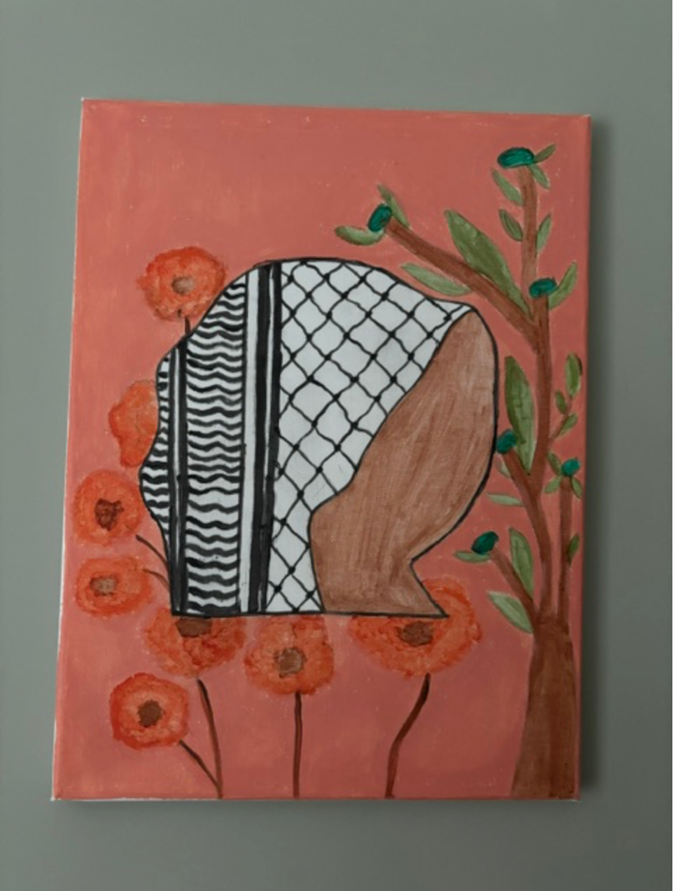
What worries me most then is not tiredness itself. Tiredness can still signal that something in us refuses to adapt. What worries me is numbness. The slow process through which death, destruction and dehumanization become ordinary. To become accustomed to a world where mass killings take place while we sip our tea, read and write. To scroll past images of genocide and continue with our day. To mistake awareness of injustice for responsibility. The greatest victory of any system of domination is not only the destruction it inflicts on its victims, but also the numbness it knows to produce in the rest of us who witness it. Once we become numb, we cease to ask questions. Once we become numb, the unbearable and the unacceptable becomes ordinary background noise. Once we become numb, entire peoples can disappear before our eyes while we are surrounded by people who ‘productivity’, ‘excellence’, ‘growth’ and ‘the future’. Red lines are shifted and eventually disappear. I refuse to become accustomed. I do not ever want to learn how to live comfortably alongside annihilation of entire generations. I do not want to make peace with the destruction of different worlds.
When I say I am tired of this world and this life to those who are close to me, I can see worry and fear in their eyes. As though I am speaking of giving up on life itself. But that is not what I mean. What I have been trying to practice is a certain disloyalty to and detachment from what bell hooks calls the white-supremacist capitalist patriarchal world. Not because I stand outside it. I do not. None of us do. Rather because remaining attached to this world makes it harder to remain alive and human. Only by becoming disloyal to this world am I able to remain alive and human. So, what does it mean to write such a feminist love letter from my position in relative safety in fortress Europe? This letter begins in contradiction because contradiction is precisely where many of us live. We live in countries and inhabit institutions that grant us mobility while denying it to others. We cross borders for conferences, fellowships and vacations while Others are detained by borders, trapped behind them or swallowed by them. The same Mediterranean Sea that some of us cheerfully cross so we can talk academic papers about global injustices has become a graveyard for many Others whose lost lives become evidence to be weighed and considered in debates about whether this constitutes an injustice.
Our lives are not outside these realities but run through them. The computer on which I am writing this letter, the university that pays my salary and the home from which I am able to imagine a future six months from now are all entangled with a world organized through extraction, occupation, displacement, racial hierarchy and militarized borders. The contradiction is not that suffering exists elsewhere while life continues here. The contradiction is that our institutions encourage us to experience these realities as unrelated and separate. Universities continue to evaluate our productivity. Grant applications must be submitted. Conferences continue as scheduled. Universities demand from us to produce ‘output’ that produces ‘societal impact’ as though history were unfolding somewhere else. As though our lives are untouched by what we witness. As though our comforts are private achievements rather than arrangements sustained by neocolonial and imperialist distributions of life and death. As though genocide and mass killings are a temporary and ‘inconvenient’ interruption rather than a constitutive feature of the very white-supremacist capitalist patriarchal world we live in. As though death and destruction belong to Others while life and progress belong to an exclusionary white patriarchal us.
There is no innocent position from which to begin. We are implicated. The task, then, is not to become innocent. The task is to remain human in a world that violently forces us to dehumanize others and become detached from what makes us human. For me, this is where love enters. Again and again, I find myself returning to James Baldwin’s understanding of love. In The fire next time, Baldwin described the transformative power of love if we would take it seriously as:
“love takes off the masks that we fear we cannot live without and know we cannot love within. I use the word “love” here not merely in the personal sense but as a state of being or a state of grace, not in the infantile American sense of being made happy but in the tough and universal sense of quest and daring and growth” (pp. 102-103).
For Baldwin love was the courage to face reality. It was the willingness to see ourselves and one another clearly without illusion and without looking away. When I say that remaining alive and human requires a certain disloyalty to this white-supremacist capitalist patriarchal world, I mean learning to see without illusion. Baldwin writes that love requires us to remove the masks we fear we cannot live without. To see clearly, then, is to recognize the white patriarchal masks that (neo)colonial and patriarchal domination hand us. These masks promise protection, belonging, or power, but they also distance us from ourselves and one another. To insist on living behind them is, in a sense, to accept death and dying. To shed them, even partially, even imperfectly, is to choose life. Perhaps this is why I keep returning to love as a feminist lifeline. Not because love makes the world less violent, but because love refuses the ongoing dehumanization and isolation upon which violence depends. As bell hooks reminds us in her book All about love, love is never merely a feeling but a practice of care, commitment, responsibility, respect and trust. Such a practice asks us to care for one another and resist racist and capitalist habits that normalize fear, competition and disconnection.
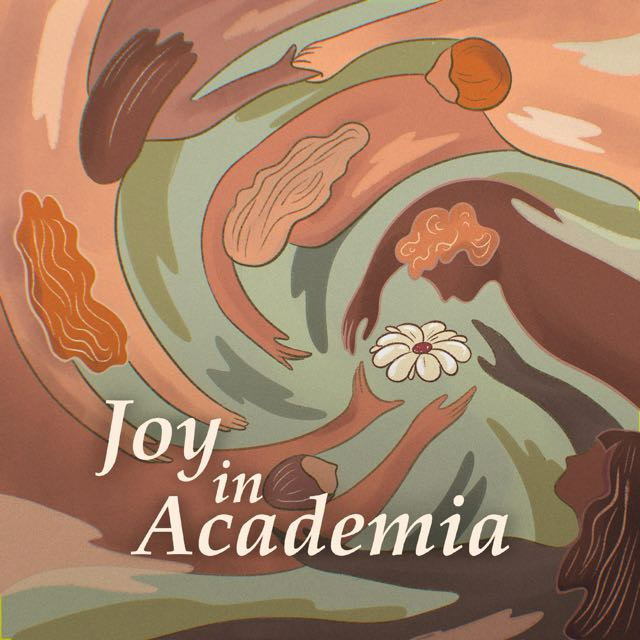
To love, in this sense, is also to witness. To witness is to refuse disappearance. It is to insist that the lives of others enter our moral and political imagination and transform how we live, what we value and what we are willing to fight for. Witnessing is an act of love. But love alone is not enough. We also need joy. Over the past years, my search for such joy led me to co-create the Joy in Academiapodcast with colleagues turned friends Dounia Bourabain, Zehra Çolak, Onur Sahin and Daudi van Veen. What began as a question of how to sustain ourselves as academics of colour in a white academy became a refusal of the isolation that academic life so often produces. In conversation with academics of colour across countries and career stages, I encountered not only exhaustion but joy:joy in mentorship, friendship, collective thinking, laughter, care and community. Joy in finding one another despite institutions that encourage us to experience ourselves as individuals. This joy is insurgent. It is a refusal to surrender life to those who organize the world through death. It shows us that another way of living together is possible.
Perhaps then joy is not the opposite of grief. Perhaps joy is what allows grief to remain connected to love rather than turning into despair. This is the lesson I want to leave you with. Not that we should stop grieving. Not that we should stop feeling tired. Not that we should overcome despair once and for all. But that we should refuse numbness. Let us remain accountable to what we witness. Let us allow ourselves to be changed by it. Let us build lives capable of holding grief without becoming numb and responsibility without becoming paralysed. Let us continue to gather, organize, teach, write, cook, mourn, celebrate, make art and care for one another. Let us continue creating life in the present. It is how we remain alive and human.
And in times of genocide, mass displacement and everyday dehumanization, remaining human may itself be one of the most radical acts available to us.
Zakia Essanhaji is a researcher, writer and co-founder of the Joy in Academia podcast. She writes about whiteness and power and looks for ways to practise Otherwise worlds to remain human in a world that insists otherwise.
Only by becoming disloyal to this world am I able to remain alive and human. Zakia Essanhaji wrote a love letter to those that try to remain alive, hopeful and human in a world that insists on death, destruction and dehumanization.
Feminists have had to confront sexual violence head-on. With courage and pugnacity, they politicised individual tragedies and turned them into a collective experience to be reckoned with. Massilia Ourabah expresses her feminist gratitude, and asks men: We did Me Too, how about Your Turn?
Noortje van Amsterdam paints the sky from her home. She is looking for crip solidarity: "My wish is for us (yes, together!) to reach for the sky in order to build networks where we can rehearse crip solidarity as a reformulation of our relationships with our workplaces, our own bodies, and those of others."
Feminists have written extensively about mothers and motherhood. But how do we relate critically and lovingly to our feminist (fore)mothers? Irene van Oorschot searches for answers in her deceased mother's library