



As I write this, I have been on sick leave for about three months. It’s not the first time in in my life that I have been confronted with illness or setback, but it is the first time I am unable to work for an extended period. I write to you from the depths of it, in search for something that extends beyond my own troubles; in search for connection and solidarity. I think the concept of crip solidarity can help us feel and think through sick leave and reformulate our relationship to work and the underpinning socioeconomic system that leaves so many sick and depleted.
But that will come later. First, I want to reach for the sky.
In the first weeks of my sick leave, I couldn’t do much. I felt exhausted and couldn’t even pinpoint where my body hurt because the pain seemed to come from everywhere. Most of the time, I was too nauseous to move, feverish, and coughing my lungs out. I spent my days in a haze, lying in bed or on the couch in my living room. I could still read but not for long stretches of time and only simple novels. I developed a deep appreciation for sweatpants and an acute awareness of the many stairs in my house that I suddenly had trouble navigating. I alternated lying down with my eyes closed, listening to music, and looking at the sky. I am lucky to live in a house where I can see the sky, both from my bed and from my couch.
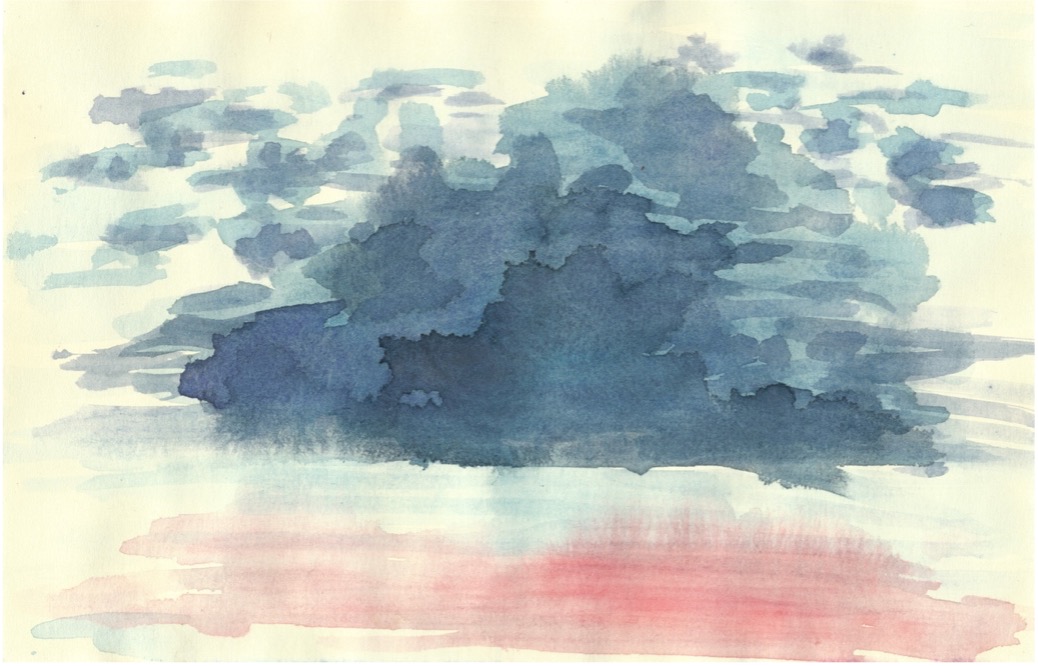
In those first weeks the sky became an important reference point for my attention, however scattered and fluctuating. It wasn’t a conscious, reasoned decision to start paying attention to the sky. It was simply there, and I needed something to distract me from my aching body and frantic mind. The fall offered good weather and often the morning skies were stunning. So I spent a lot of time paying attention to the sky - reaching inward for answers to the question why exactly I was feeling so horrible, and outwards in search for something bigger than myself, some connection to an outside and my place in it. Meanwhile, friends provided care and support. They answered my texts full of questions, listened to my tired voice over the phone, and came over to hold me and cry with me while I relayed some of the worst parts of my bodies’ past and present.
I received the deepest care from those who know what it is like to struggle with illness or disability. I felt crip solidarity.
Even though I was overwhelmed by all sorts of intense sensations in those first weeks of my sick leave, I had trouble disconnecting from work. I was feeling guilty towards my colleagues who had to pick up extra tasks because I was unable to do them. And I was feeling ashamed for not being able to measure up to the ideal of being a productive member of society. I thought that if only I could toughen up, I would be able to dust myself off and return to work.
But I couldn’t.
It raised questions: who am I, and what is my value and place in the world if I am unable to work? I write this in the past tense as if I have successfully moved beyond these issues. However, these questions and accompanying feelings are hard if not impossible to disentangle from since they are based in the capitalist production system that essentially defines our worth in terms of paid labour. They still resurface regularly for me. Every time I start to feel slightly better, I get restless. My first impulse is to think: ‘I can get back to work now!’ – even though I am quite busy with my recovery and the ongoing unpaid labour in my role as a mother, a partner, a friend.
When I manage to convince myself that rushing this is not a good idea, I want to clean something, cook something, create something, or buy something. Basically, I want to have something to show for my time; to produce, consume, or both. It is simultaneously terrifying and interesting to experience the stronghold of neoliberal capitalism in this way. My good friend Katrine Meldgaard-Kjaer and I have an ongoing conversation on this topic that extends our earlier work on navigating illness and disability within the linear time demands of the neoliberal capitalist workplace. The main question we keep returning to is: Why it is so hard for us and many others to just be?
We are inspired to look for answers within feminist disability studies.
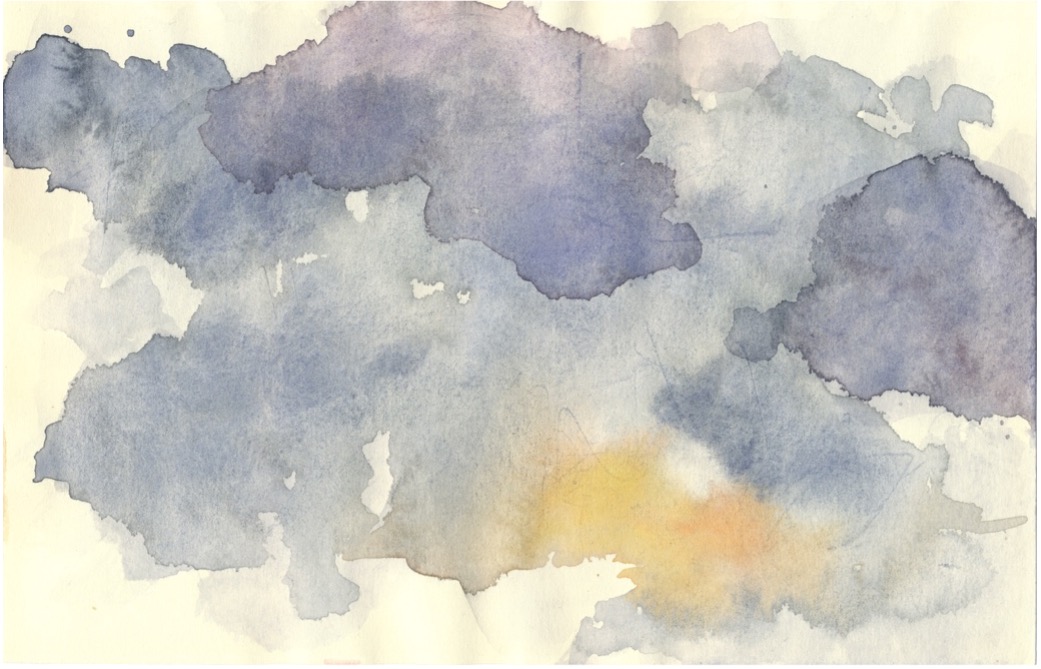
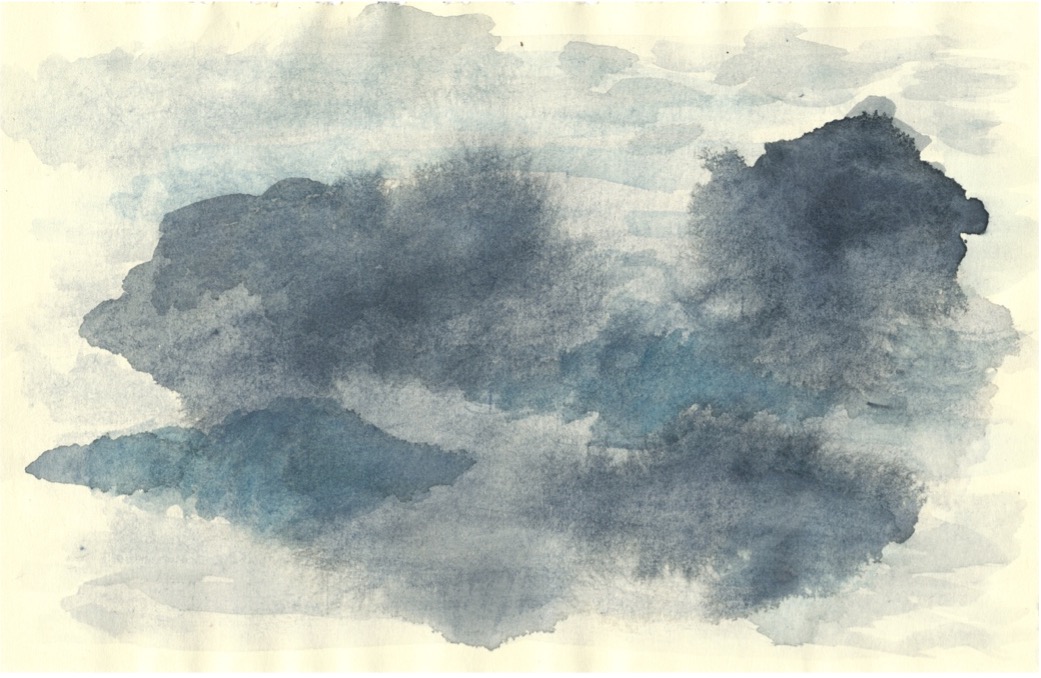
Meanwhile, I am still spending lots of time looking at the sky, and she proves a valuable conversation partner in relation to this question too. The days have been dark and often grey, but not without definition and depth. Clouds roll in. In the mornings the clouds often have a purple-ish hue. When it rains, they seem charcoal with a hint of blue or green. At sunrise and sunset, I can often distinguish some pink, orange, and yellow. The clouds shapeshift before my eyes from puffy cottonwool to feathery wisps. Bordering the clouds there is sometimes the proverbial silver lining. Even when the sky is a homogenous and slightly boring grey this will change with time. The sky is simply there, in all her multiplicity, constantly changing colour and mood. Looking at the sky requires you to pay attention to what is right above you in the ‘now’ and acknowledge the transience of each moment.
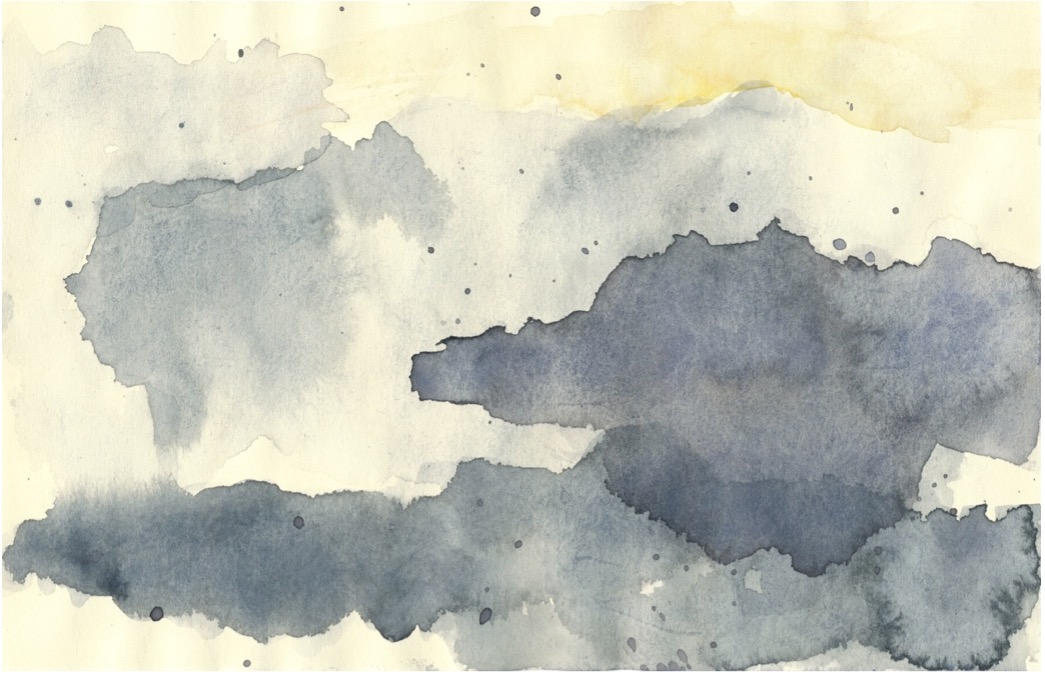
After those first overwhelming weeks of sick leave, I started painting the sky with water colours. I try to do one every day to remind myself to actively pay attention to beauty, even if it isn’t immediately apparent such as on dreary grey days. I share the collection of skies that I painted so far through an online flip book (click here). I don’t want to frame them as lessons, because I think framing sick leave as a learning experience risks a self-righteous call for ‘mining’ illness to extract life lessons and personal growth.
Being sick sucks.
It has no meaning.
It is both bad luck
and part of life.
Maybe you’re reading this and think ‘But I learned lots during my sick leave’. That’s great; illness can indeed stimulate reflection and growth. It becomes problematic, however, when illness is only speakable in terms of what has been learned from it. Or worse: the argument that someone is ill is because they need to learn an important life lesson. Learning then becomes a moral demand towards redemption from the stigma of illness and the inability to work a paid job.
Where does that leave those of us with chronic conditions and disabilities?
I sometimes catch myself practicing how to narrate my illness to colleagues. I always use the past tense, as if I have bravely fought and overcome. I guess this 'supercrip' narrative is one of the few socially acceptable ways of performing illness. Yet we all encounter illness or disability at some point in our lives, and people often don’t move in a straight line from being ill to being better. This is why feminist disability scholars such as Ellen Samuels, Sami Schalk, Alison Kaferand Anaïs van Ertvelde remind us that people are only ever temporarily able bodied. They reclaim the derogatory concept of ‘crippled’ – shortened to ‘crip’ – to focus on the experiences and social norms surrounding disability as they intersect with race, class and gender, and celebrate disability pride. Crip comes with its own temporality that sits uncomfortably with linear work time and rhythms. Thinking with crip theory is radical as it exposes the systemic abuse enacted by capitalism through the ways work is organized.
There is no amount of yoga, deep breathing, or therapy that can fully counter this extraction and depletion of our physical, mental, and emotional resources.
Please, don’t get me wrong: I do all these things. I sit on my yoga mat and stretch like a good girl. I do meditations in attempts to manage my stress levels. And I try to think positive thoughts in the hope that these will spill over into my feelings. These are not bad practices; I just think they shouldn’t be the only things we do to try to cope with illness. The focus on yoga, meditation, therapy, and ‘setting boundaries’ individualizes illness and disability and as such distracts us from the systemic aspects of these issues and prevents us from building community and solidarity.
If we accept the fact that able-bodiedness is only ever a temporary condition, we start to see how neoliberal capitalism is based on the myth of endless human work-ability and linear growth. This harms us to the point of breakdown, especially those in already marginalized positions - such as women, people of colour, the working class, queer and disabled folks - who carry an unequal share of the reproductive labour, are overexposed to unhealthy work and living conditions, and are subjected to discrimination and neglect, specifically also in health care.
I am a fairly privileged cisgendered white woman, and I am literally sick and tired of the systemic violence that I have encountered in my life. I don’t want to carry all the responsibility and care for the fallout that I am experiencing right now by myself. Can we reinvent ourselves as a mycelium or an ecosystem of differently cripped and entangled bodies that depend on and support each other? Not because we’re altruistic but because the wellbeing of one is connected to the wellbeing of all?
I present my paintings here to you as an invitation to consider crip solidarity as resistance against the socioeconomic system that organizes both the breakdown of our bodies – whether we call it burnout, long-covid, trauma, a concussion, depression, chronic illness, or something else – and the loneliness that surrounds these. This is an invitation that dovetails with Marguerite van den Bergs call to see and use the political potential of our vulnerability.
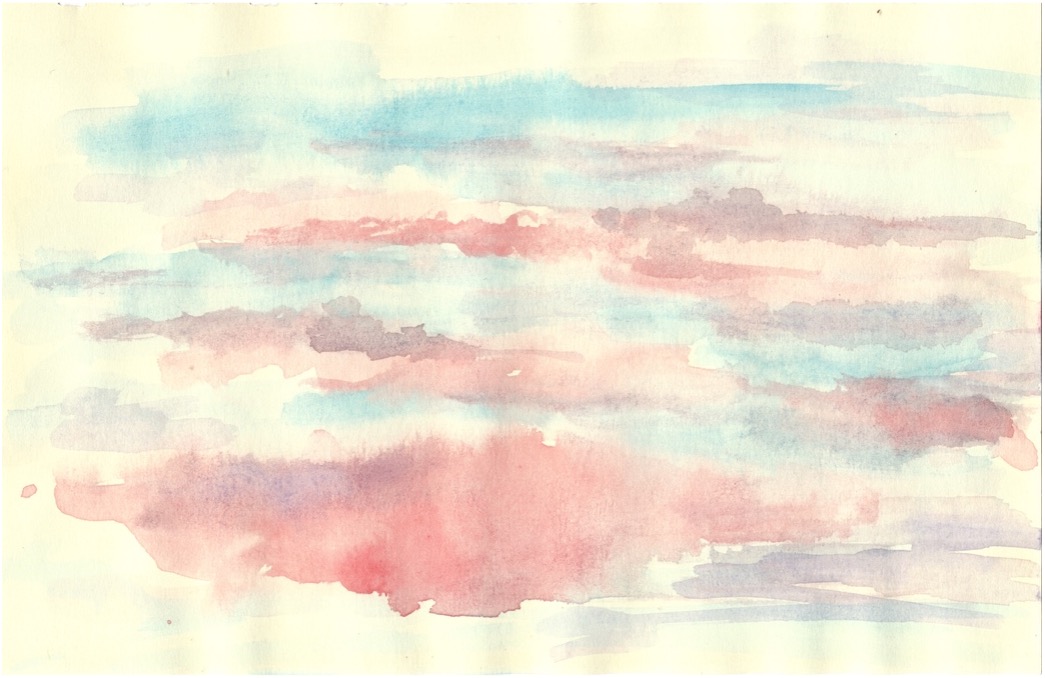
So please look at the skies in the flip book (click here) and look up from time to time to the version above you. Remind yourself that we are all connected. Remind yourself that we are all crip at some point. Remind yourself that life is an endless series of comings and goings, of pain and joy, of wonderful and agonizing contradictions that we should not shoulder alone. I try to do the same. My wish is for us (yes, together!) to reach for the sky in order to build networks where we can rehearse crip solidarity as a reformulation of our relationships with our workplaces, our own bodies, and those of others.
With love, in solidarity,
Noortje
Only by becoming disloyal to this world am I able to remain alive and human. Zakia Essanhaji wrote a love letter to those that try to remain alive, hopeful and human in a world that insists on death, destruction and dehumanization.
Feminists have had to confront sexual violence head-on. With courage and pugnacity, they politicised individual tragedies and turned them into a collective experience to be reckoned with. Massilia Ourabah expresses her feminist gratitude, and asks men: We did Me Too, how about Your Turn?
Noortje van Amsterdam paints the sky from her home. She is looking for crip solidarity: "My wish is for us (yes, together!) to reach for the sky in order to build networks where we can rehearse crip solidarity as a reformulation of our relationships with our workplaces, our own bodies, and those of others."
Feminists have written extensively about mothers and motherhood. But how do we relate critically and lovingly to our feminist (fore)mothers? Irene van Oorschot searches for answers in her deceased mother's library